



Unofficial HDPE Fusion Study Guide: Butt, Electrofusion, Socket, and Saddle Fusion
By Hold Point Prep
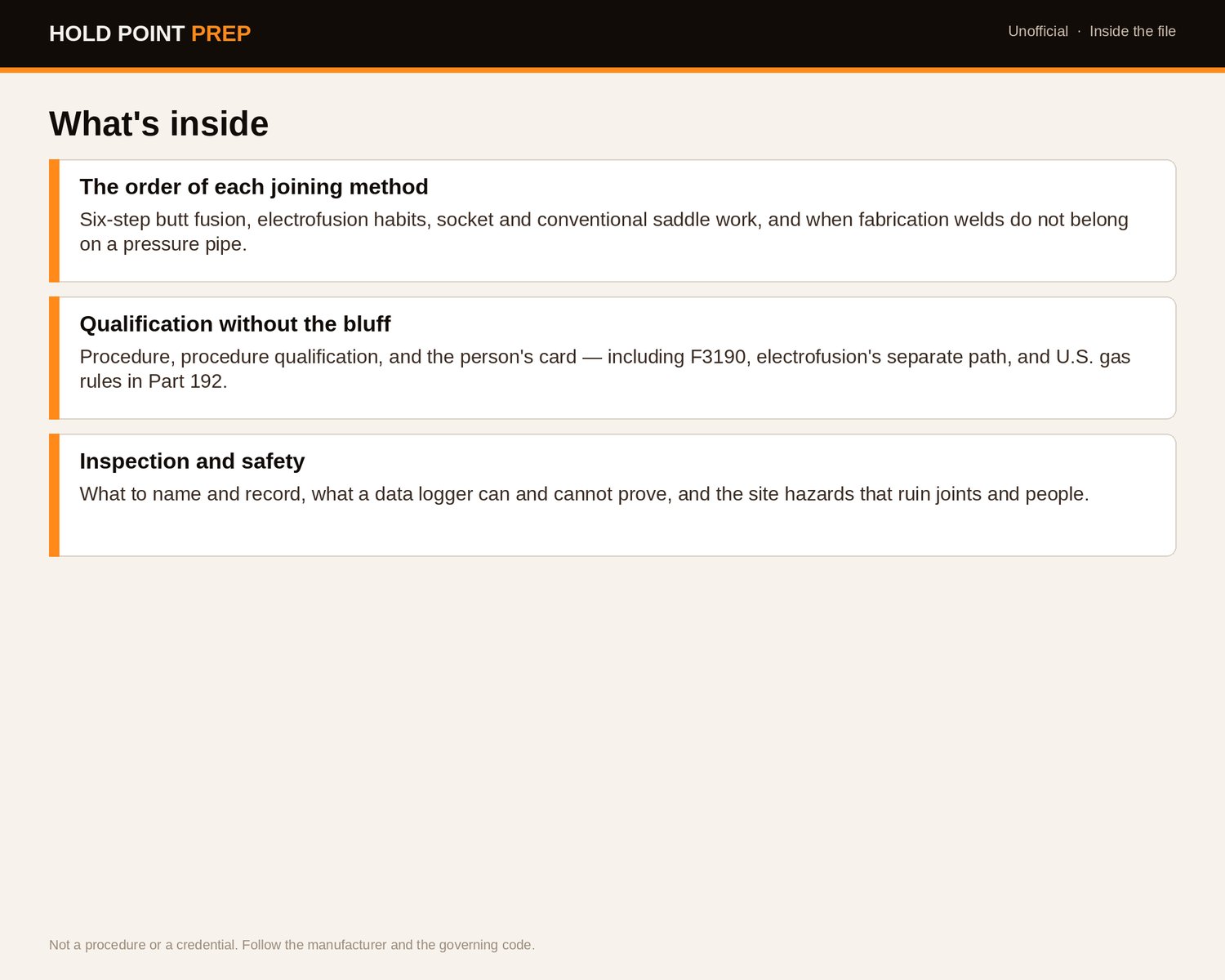
A plain-language study guide on joining polyethylene (PE / HDPE) pipe and fittings: butt fusion, electrofusion, socket fusion, conventional saddle and sidewall fusion, and when hot-gas or extrusion welding belongs on a fabrication — and when it does not belong on a pressure pipe.
This unofficial guide teaches the order of the work, the habits that keep a joint clean, how procedures and qualifications differ, what to look at and write down, and the safety stops that matter. It leaves temperatures, times, pressures, and acceptance limits in the current governing procedure, the manufacturer's instructions, and the project specification.
WHAT YOU GET
A digital PDF study guide, plus the markdown source of the same text.
WHAT THIS IS NOT
A fusion procedure, a qualification card, a code book, or an official class from PPI, ASTM, AWS, ASME, or anyone else.
GOOD TO KNOW
• Instant digital download. Nothing is shipped.
• License: single user. Print it for your own study, but please do not share, resell, or upload it.
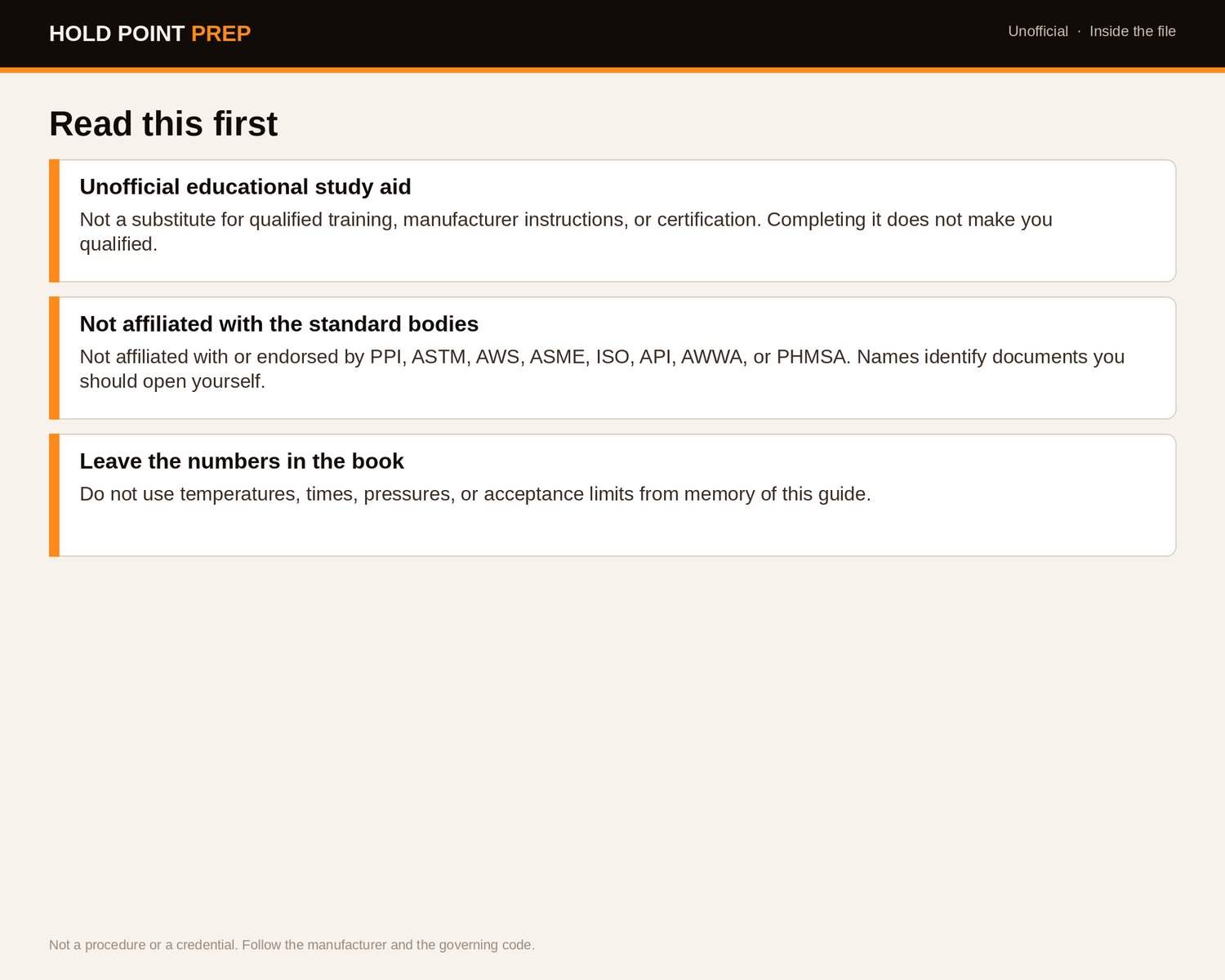
Unofficial educational study aid from Hold Point Prep. It is not a substitute for qualified training, manufacturer instructions, or certification. Completing it does not qualify anyone to make joints.
Hold Point Prep is not affiliated with, sponsored by, or endorsed by the Plastics Pipe Institute (PPI), ASTM International, AWS, ASME, ISO, API, AWWA, PHMSA, or any pipe, fitting, or equipment manufacturer. Names of standards and organizations belong to their owners and appear only to identify documents you should obtain and read for yourself.
Do not use temperatures, times, pressures, voltages, scrape depths, or acceptance limits from memory of this product. Read them from the current edition of the governing procedure, the manufacturer's instructions, and the project specification on the day you do the work.
Buying or using this product does not guarantee that you will pass any exam or become qualified. On the job, the governing code, the qualified procedure, the manufacturer instructions, and the project specification always take precedence. Follow the safety instructions of the equipment manufacturer and the occupational safety rules that apply to the site.
How this was made: drafted with the help of AI software tools, then checked against cited public sources before release.
More inspector study aids and field tools: https://holdpointprep.net